 +86 21 51096910
 sales@welsobio.com / marketing@welsobio.com




+86 21 51096910
sales@welsobio.com / marketing@welsobio.com
Carbon nanotubes (CNTs) are one-dimensional quantum materials with unique structures and exceptional mechanical, electrical, and chemical properties. Their tensile strength can reach 50–200 GPa, approximately 100 times stronger than steel, while their density is only about one-sixth that of steel. Carbon nanotubes also exhibit an elastic modulus of up to 1 TPa, comparable to diamond and about five times higher than steel. In addition to their remarkable strength, CNTs offer excellent flexibility, electrical conductivity, and thermal stability, making them widely used in electronics, energy storage, composite materials, aerospace, and advanced manufacturing.
However, impurities such as catalyst residues, metal particles, and inorganic contaminants are inevitably introduced during the synthesis process. These impurities can significantly affect the performance and reliability of carbon nanotube-based products. Therefore, accurate impurity determination has become an essential step in quality control and materials research.
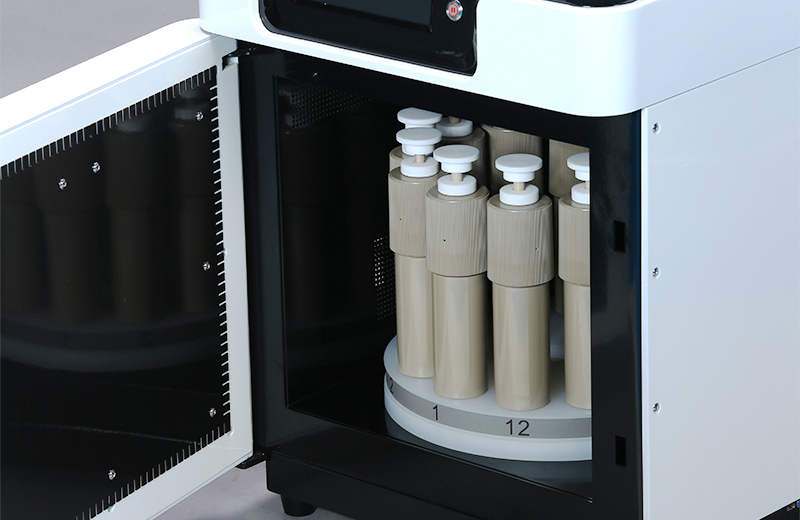
The challenge lies in sample preparation. Due to their highly stable graphitic structure, carbon nanotubes are difficult to digest completely using conventional methods. So how can laboratories efficiently prepare CNT samples for elemental impurity analysis?
Microwave Digestion: An Effective Solution for Carbon Nanotube Sample Preparation
Microwave digestion technology utilizes high-temperature and high-pressure conditions within sealed vessels to rapidly decompose difficult matrices. Compared with traditional digestion methods, microwave digestion provides faster processing, improved digestion efficiency, lower contamination risk, and better reproducibility.
Instruments and Reagents
Instruments
Microwave Digestion System
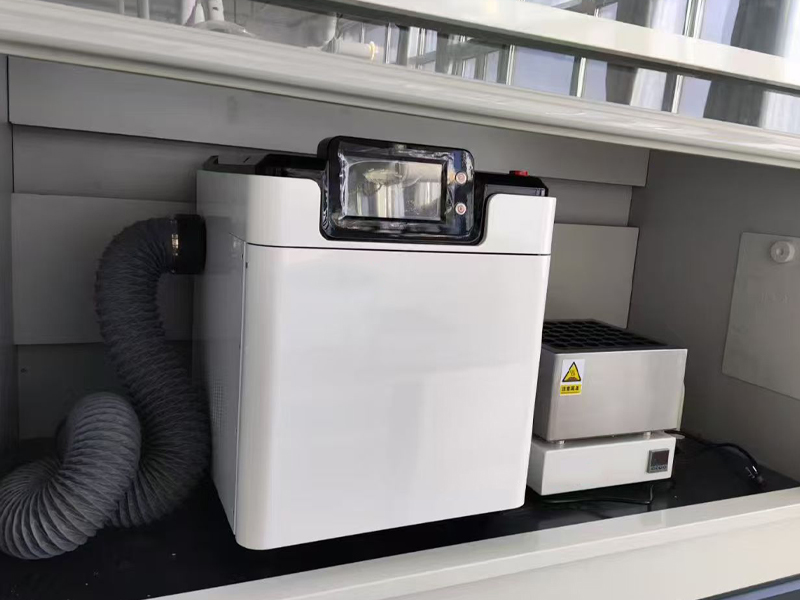
Acid Evaporation System
Analytical Balance (0.1 mg readability)
Pipettes
Reagents
Nitric Acid (HNO₃, GR)
Hydrofluoric Acid (HF, GR)
Sulfuric Acid (H₂SO₄, GR)
Experimental Procedure
Step 1: Sample Weighing
Accurately weigh 0.0500 g (±0.001 g) of carbon nanotube sample into the digestion vessel. Add:
4 mL Nitric Acid
4 mL Hydrofluoric Acid
3 mL Sulfuric Acid
Seal the vessel and allow it to stand for 10 minutes.
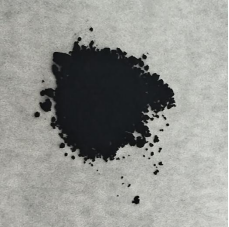
Sample Loading into Digestion Vessel
Step 2: Pre-Digestion
Place the digestion vessel on an acid evaporation system and pre-digest at 120°C for 20 minutes.
Step 3: Microwave Digestion
After cooling to room temperature, transfer the vessel into the microwave digestion system and perform digestion according to the digestion program shown below.
Step | Pressure (Bar) | Set Temperature (°C) | Power (W) | Ramp Time (s) | Hold Time (s) |
1 | 30 | 120 | 1000 | 300 | 60 |
2 | 40 | 180 | 1000 | 240 | 200 |
3 | 50 | 230 | 1000 | 240 | 3600 |
Step 4: Acid Evaporation
After digestion is completed, transfer the solution to an acid evaporation system and evaporate at 160°C until the remaining liquid volume is approximately the size of a soybean.
Digestion Results and Discussion
Digestion Results
The final digestion solution was colorless and transparent, with no visible precipitate or undigested residue, indicating complete digestion of the carbon nanotube sample.
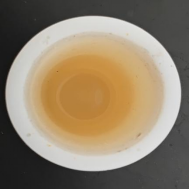
Digestion Result of Carbon Nanotube Sample
Discussion
1. Digestion Temperature Significantly Affects Digestion Efficiency
Experimental observations showed that the maximum digestion temperature had a substantial impact on digestion performance.
When the maximum temperature was set to 210°C, a small amount of carbon nanotube residue remained. Increasing the maximum temperature to 230°C resulted in complete digestion and a clear transparent solution.
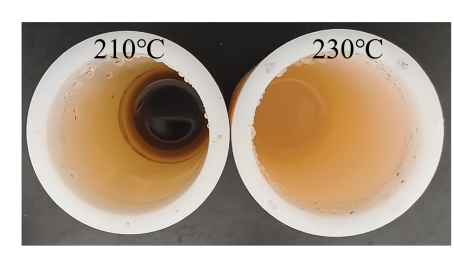
Comparison of Digestion Results at Different Temperatures
2. Sample Mass Influences Digestion Completeness
When the sample mass was increased to 0.1000 g, complete digestion could not be achieved even at a maximum temperature of 230°C.
This indicates that excessive sample loading may exceed the oxidation capacity of the digestion system, leading to incomplete decomposition.
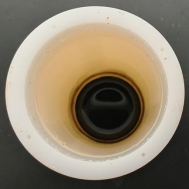
Digestion Result with Increased Sample Mass
3. Optimization of Digestion Parameters Is Recommended
For optimal digestion performance, laboratories should carefully optimize:
Digestion temperature
Sample mass
Digestion duration
Acid composition
Proper adjustment of these parameters can significantly improve digestion efficiency and analytical accuracy.
Conclusion
Carbon nanotubes are highly stable materials that present significant challenges during sample preparation for impurity analysis. Microwave digestion technology provides an efficient and reliable solution for complete decomposition of CNT samples.
Experimental results demonstrate that a sample mass of 0.0500 g combined with a maximum digestion temperature of 230°C can achieve complete digestion, producing a clear and transparent solution suitable for subsequent elemental analysis.
For laboratories performing impurity determination in carbon nanotubes and other advanced carbon-based materials, microwave digestion offers an effective sample preparation method that improves analytical reliability, efficiency, and reproducibility.

Subscribe to our Newsletter & Event right now to updated.



+86 21 51096910

sales@welsobio.com
marketing@welsobio.com

1-1009, National Industrial Design Park, No. 599 Jianzhu Road, Binhu, Wuxi , Jiangsu, China, 214062

Head Office: No. 439 Jinglian Road, Minhang District, Shanghai,China, 201108