 +86 21 51096910
 sales@welsobio.com / marketing@welsobio.com




+86 21 51096910
sales@welsobio.com / marketing@welsobio.com
In molecular biology, protein research, sample preparation, and routine laboratory workflows, temperature-controlled heating is essential for many experimental procedures. Two commonly used pieces of equipment are the water bath and dry bath (dry block heater).
Both devices provide controlled heating for laboratory samples, but they use different heat-transfer methods and have different requirements for sample containers, temperature control, cleaning, and daily operation.
So, which one should your laboratory choose?
The answer depends on your experimental workflow, sample volume, container type, temperature requirements, and maintenance preferences. This guide compares water baths and dry baths to help laboratory professionals make a practical purchasing decision.
1. What Is the Difference Between a Water Bath and a Dry Bath?
The main difference between a water bath and a dry bath is how heat is transferred to the sample.
How Does a Water Bath Work?
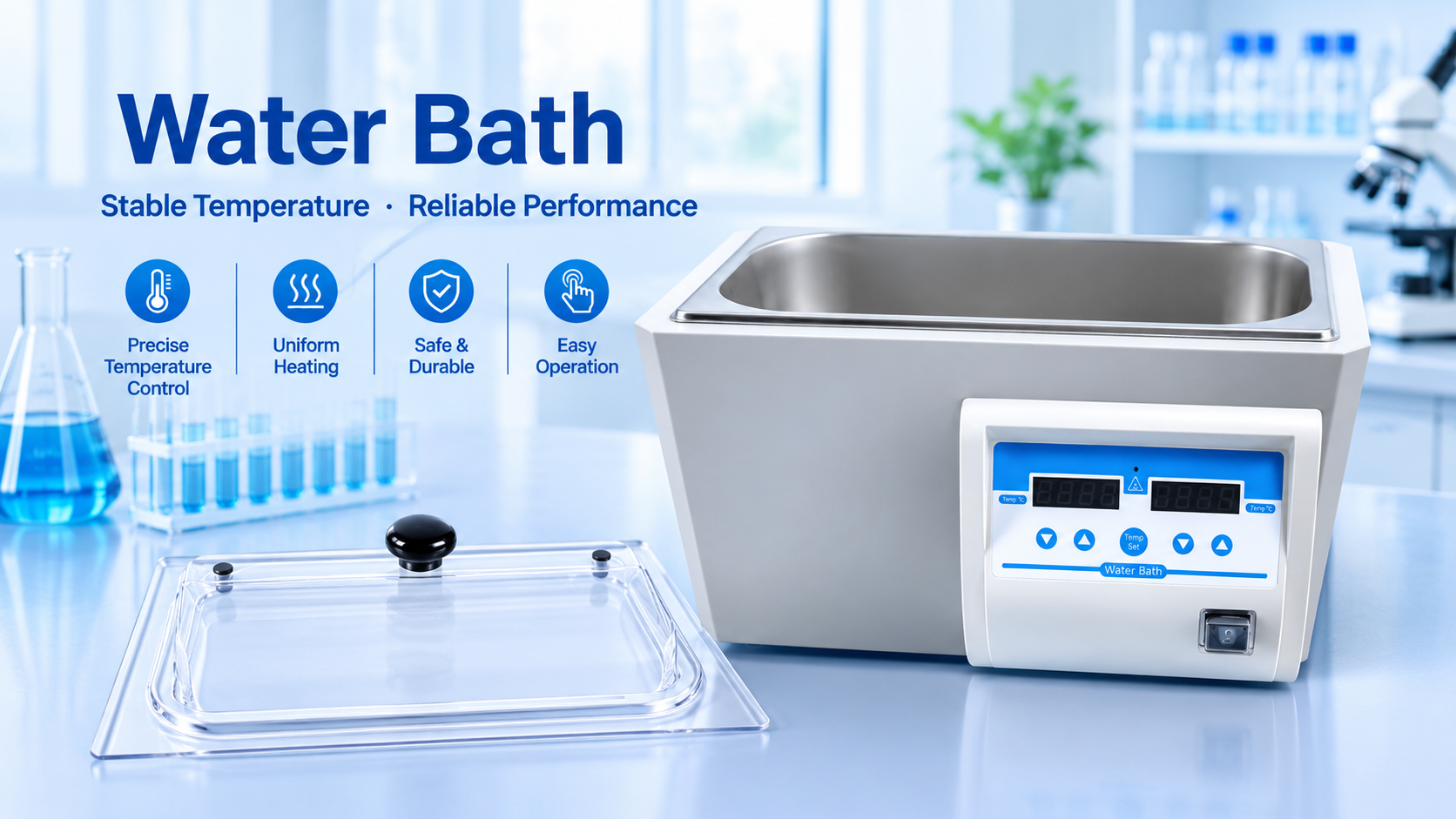
A laboratory water bath uses an electrically heated water reservoir to maintain a controlled temperature. Samples are placed in the water, usually inside test tubes, centrifuge tubes, bottles, or other compatible containers.
Heat is transferred from the heated water through the container walls to the sample. Because water provides a surrounding liquid heating environment, a water bath is suitable for applications involving different container shapes and relatively large sample volumes.
Key characteristics:
● Uses heated water as the heat-transfer medium.
● Suitable for various sample containers and larger vessels.
● Provides a surrounding liquid heating environment.
● Requires regular water replacement and reservoir cleaning.
● Water evaporation and water quality need to be monitored during operation.
How Does a Dry Bath Work?
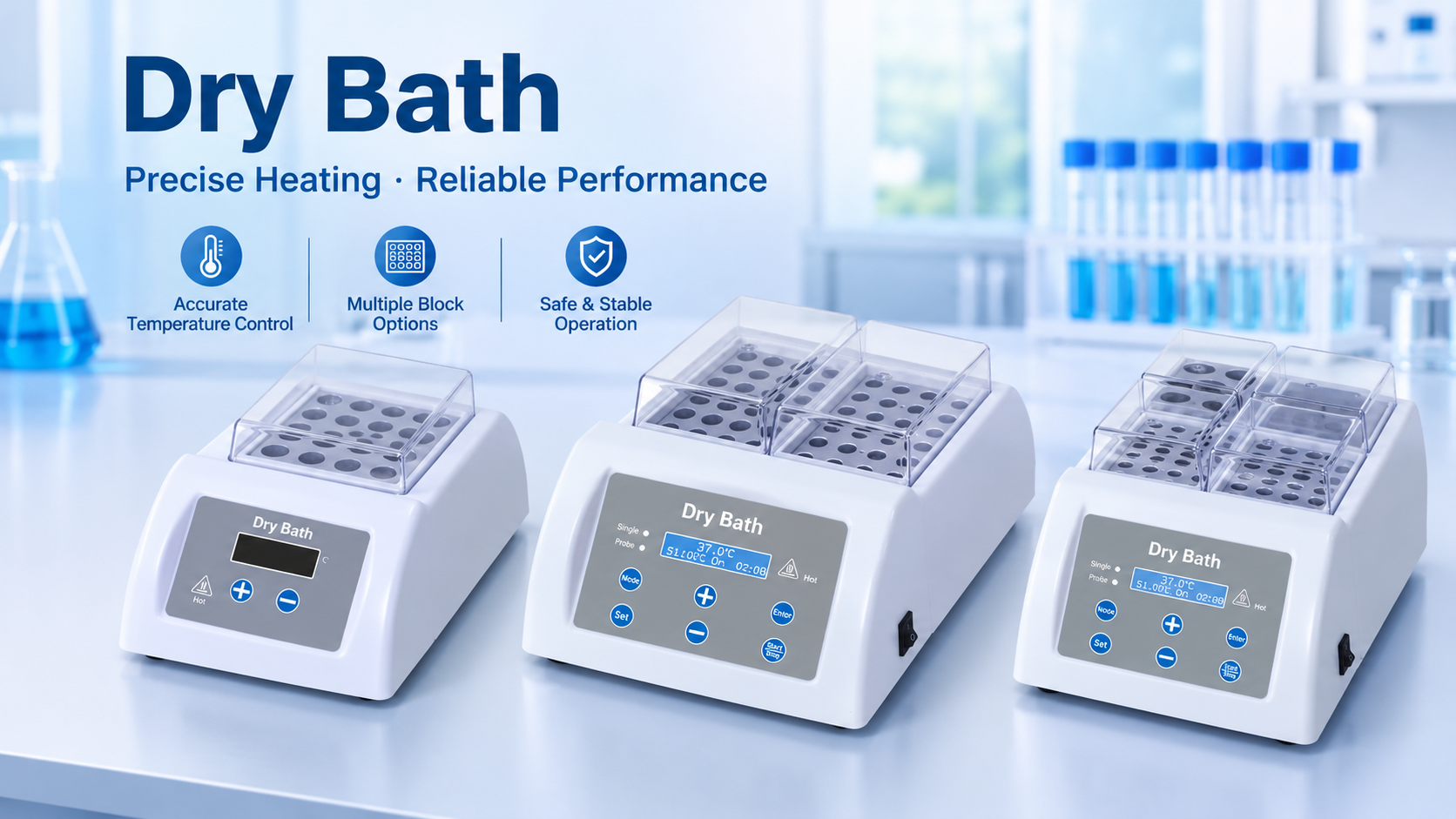
A dry bath, also known as a dry block heater or dry bath incubator, uses an electrically heated metal block to transfer heat directly to sample containers.
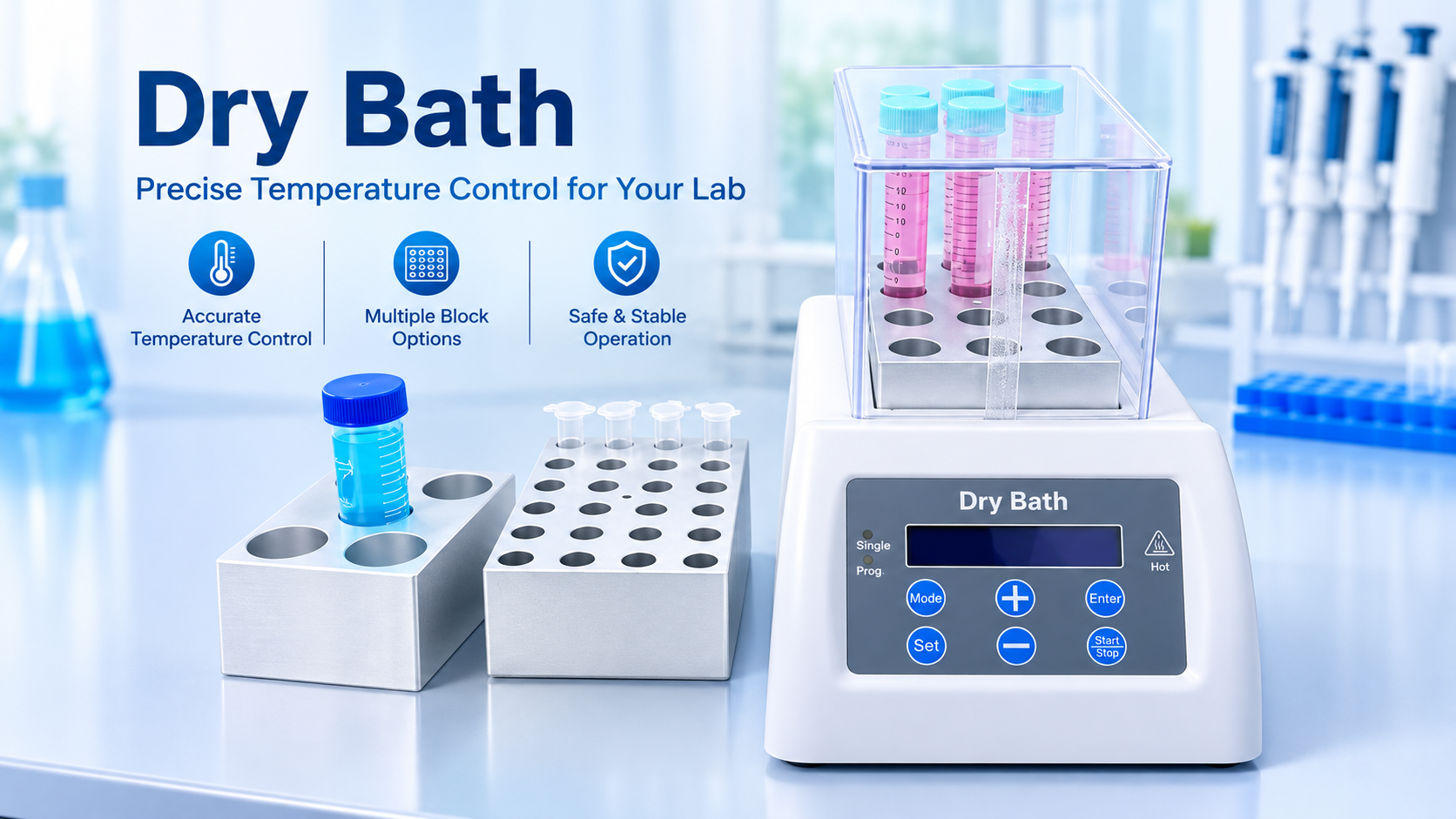
The metal block contains precisely machined wells designed for specific tube sizes, such as 0.2 mL PCR tubes, 1.5 mL and 2.0 mL microcentrifuge tubes, or other compatible laboratory vessels.
The sample container is inserted into a matching well, allowing heat to transfer from the metal block through the tube wall to the sample.
Key characteristics:
● Uses a heated metal block instead of water.
● Supports standardized tubes and containers through interchangeable blocks.
● Avoids water-related contamination on the exterior of sample tubes.
● Does not require water replacement or reservoir cleaning.
● Requires compatible heating blocks for different tube sizes.
In simple terms, a water bath heats samples through a surrounding water environment, while a dry bath transfers heat through a solid metal block.
2. Water Bath vs. Dry Bath: 8 Key Differences
Although both devices are designed for laboratory heating, their practical performance and operating requirements differ.
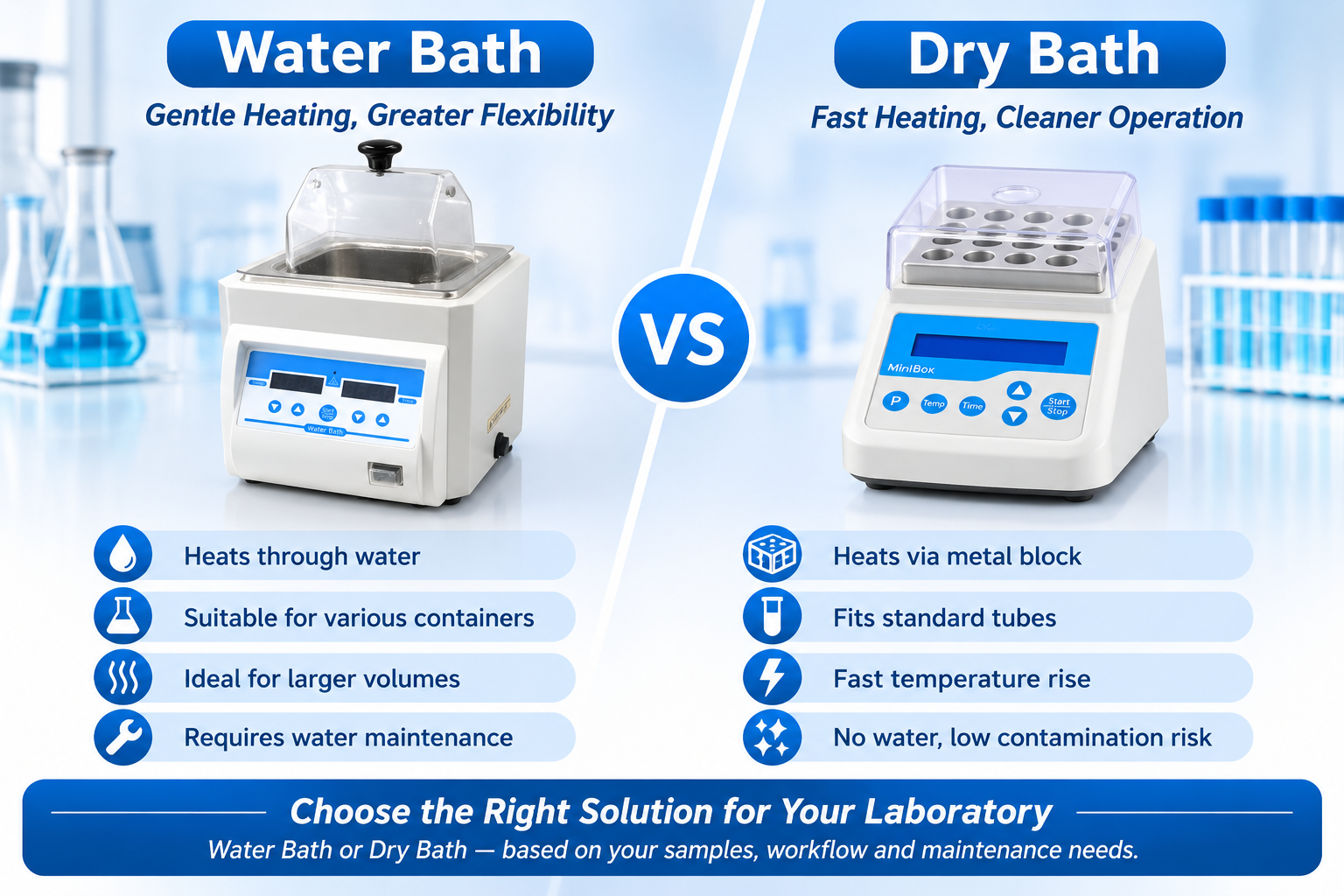
Comparison | Water Bath | Dry Bath |
Heating method | Heated water | Heated metal block |
Heat transfer | Through water and container walls | Through metal block and container walls |
Temperature stability | Depends on circulation, water volume, and control system | Depends on block design, temperature control, and sample loading |
Heating efficiency | Requires heating the water reservoir | Heats the metal block |
Sample compatibility | Flexible container shapes and sizes | Depends on compatible block wells |
Contamination management | Requires water quality monitoring and regular cleaning | No water reservoir; easier to keep the heating area clean |
Maintenance | Water replacement, cleaning, and descaling when necessary | Mainly block cleaning and routine inspection |
Space requirements | Generally requires a larger working area | Often more compact and suitable for benchtop use |
Important: Neither device is automatically more accurate or faster in every situation. Actual heating performance depends on the equipment specifications, sample volume, tube material, block-to-tube contact, water circulation, and operating conditions.
3. Which Applications Are Better Suited to a Water Bath?
A water bath is often the more practical choice when laboratories need flexible heating for different containers and sample volumes.
Common applications include:
1. Heating Larger Sample Volumes
Water baths can accommodate compatible bottles, flasks, and other larger vessels that may not fit standard dry bath blocks.
2. Reagent and Buffer Preparation
They are useful for warming laboratory reagents, buffers, and solutions when a surrounding liquid heating environment is appropriate.
3. General Laboratory Sample Heating
For routine heating tasks involving different container shapes, a water bath offers greater flexibility than a block-based system.
4. Thawing and Temperature Equilibration
Water baths are commonly used for thawing compatible reagents and samples under controlled conditions, provided that the containers are properly sealed and the procedure permits water-bath heating.
For laboratories with diverse sample containers and general-purpose heating requirements, a water bath remains a versatile option.
4. Which Applications Are Better Suited to a Dry Bath?
A dry bath is particularly useful for standardized, small-volume laboratory procedures that require controlled incubation in specific tubes.
Common applications include:
1. Molecular Biology Experiments
Dry baths are frequently used for enzyme incubation, restriction digestion, DNA denaturation, and heat-inactivation procedures when the required temperature and incubation conditions are supported by the instrument.
2. Nucleic Acid Extraction and Sample Preparation
Many nucleic acid extraction workflows include temperature-controlled incubation steps. A dry bath can provide a convenient heating platform for compatible microcentrifuge tubes.
3. Protein Research
In protein-related experiments, dry baths can be used for controlled incubation, reagent preparation, and other temperature-dependent procedures. The selected temperature must be compatible with the specific protein and experimental protocol.
4. Small-Volume Sample Incubation
For workflows using 0.2 mL, 1.5 mL, or 2.0 mL tubes, a matching metal block provides a practical way to heat multiple samples in a compact workspace.
5. Laboratories with Limited Bench Space
Dry baths are often compact and do not require a water reservoir, making them convenient for laboratories with frequent small-volume heating tasks.
For molecular biology and sample preparation workflows, a dry bath can be a particularly practical choice when standardized tube formats are used.
5. Water Bath or Dry Bath: Which One Should You Choose?
The best equipment depends on what your laboratory actually does every day.
Here are some practical selection guidelines.
Choose a Water Bath If:
● Your experiments involve flasks, bottles, or larger sample containers.
● You frequently heat solutions with different container shapes.
● You need a general-purpose heating device for multiple laboratory tasks.
● Your workflow benefits from a surrounding liquid heating environment.
● Your laboratory can maintain water quality and perform regular cleaning.
Choose a Dry Bath If:
● Your experiments mainly use microcentrifuge tubes or PCR tubes.
● You regularly perform molecular biology and sample preparation procedures.
● You want to avoid water-reservoir maintenance.
● Your laboratory has limited benchtop space.
● You need interchangeable blocks for different tube formats.
● Your procedures involve frequent, standardized incubation steps.
Do You Need Both?
For laboratories with diverse experimental workflows, having both devices may be the most efficient solution.
A dry bath can handle routine small-volume incubation and molecular biology procedures, while a water bath can support larger vessels, reagent warming, and general-purpose heating.
Rather than treating these devices as direct replacements for one another, consider them complementary pieces of laboratory equipment.
6. What Should You Check Before Purchasing?
Choosing between a water bath and a dry bath is only the first step. The equipment specifications should also match your actual experimental requirements.
Dry Bath Selection Checklist
Before purchasing a dry bath, consider:
● Temperature Range: Does the operating range cover your experimental requirements?
● Temperature Accuracy and Uniformity: Are the specifications suitable for your incubation protocols?
● Block Compatibility: Are blocks available for your commonly used tube sizes?
● Block Replacement: Can heating blocks be changed easily?
● Timer Function: Does the instrument support the incubation periods required by your workflow?
● Additional Functions: Do you need programmable temperature settings or heating and shaking functions?
Water Bath Selection Checklist
When selecting a water bath, pay attention to:
● Chamber Capacity: Is the reservoir large enough for your sample containers?
● Temperature Range: Does it meet your required heating conditions?
● Temperature Stability: Can the equipment maintain the temperature required by your experiments?
● Water Circulation: Is circulation available when more consistent temperature distribution is needed?
● Chamber Material: Is the inner tank resistant to corrosion and easy to clean?
● Maintenance: Are water drainage, cleaning, and routine maintenance convenient?
For both devices, also consider calibration requirements, safety protection, after-sales service, and the availability of replacement accessories.
7. Frequently Asked Questions (FAQ)
Q1: Is a dry bath better than a water bath for molecular biology?
A dry bath is often more convenient for molecular biology procedures involving standardized small-volume tubes, such as enzyme incubation and nucleic acid sample preparation. However, the appropriate choice depends on the specific experimental protocol and required heating conditions.
Q2: Which heats samples faster, a water bath or a dry bath?
There is no universal answer. A dry bath heats a metal block, while a water bath needs to heat the reservoir water. However, actual sample heating time depends on the instrument, initial temperature, sample volume, container material, and loading conditions.
Q3: Does a dry bath reduce contamination risks?
A dry bath eliminates the water reservoir, reducing risks associated with standing water, water quality, and contamination of tube exteriors. However, it does not eliminate the need for proper sample handling, cleaning, and laboratory contamination-control procedures.
Q4: Can a dry bath replace a water bath?
Not completely. Dry baths are well suited to standardized tubes and small-volume incubation, whereas water baths offer greater flexibility for larger or irregularly shaped containers. The two devices serve overlapping but different purposes.
Q5: What is the difference between a dry bath and a heating block?
The terms are closely related. A dry bath is the complete heating instrument, while the heating block is the removable metal component containing wells for sample tubes. Different blocks can accommodate different container sizes, depending on instrument compatibility.
Both water baths and dry baths are essential temperature-control tools in modern laboratories, but they serve different operational needs.
A water bath is a versatile solution for general laboratory heating, larger containers, and applications requiring a surrounding liquid heating environment.
A dry bath is a convenient option for standardized small-volume samples, molecular biology procedures, and routine temperature-controlled incubation, particularly when reducing water-related maintenance is important.
The right choice should be based on sample type, container compatibility, temperature requirements, workflow frequency, and laboratory maintenance capabilities.
By evaluating these factors before purchasing, laboratories can select heating equipment that better supports their experimental procedures and daily operations.

Subscribe to our Newsletter & Event right now to updated.



+86 21 51096910

sales@welsobio.com
marketing@welsobio.com

1-1009, National Industrial Design Park, No. 599 Jianzhu Road, Binhu, Wuxi , Jiangsu, China, 214062

Head Office: No. 439 Jinglian Road, Minhang District, Shanghai,China, 201108