 +86 21 51096910
 sales@welsobio.com / marketing@welsobio.com




+86 21 51096910
sales@welsobio.com / marketing@welsobio.com
Experimental Background
In the field of materials science, the preparation of nanomaterials remains a key research focus. Zinc sulfide (ZnS), as a typical II–VI semiconductor material, is widely used in optoelectronic devices, display technologies, and sensors. When the particle size is reduced to the nanoscale, ZnS exhibits pronounced quantum size effects, leading to significant changes in its optical, electrical, and chemical properties.
Nano-scale ZnS demonstrates excellent luminescent properties and strong chemical stability, making it highly promising for applications such as electroluminescent devices, photocatalysis, and bio-labeling. However, achieving efficient and controllable nanoscale processing while maintaining material purity remains a major challenge. Traditional mechanical grinding methods often suffer from low efficiency and contamination issues, making them unsuitable for high-standard applications.
Equipment
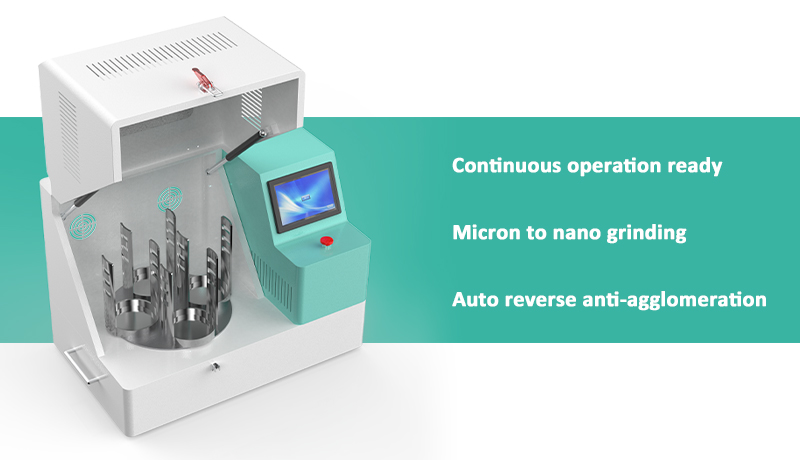
Welso Planetary Ball Mill
250 mL Agate Grinding Jar
Zirconia Grinding Balls (mixed sizes)
Objective
To reduce micron-sized zinc sulfide particles to approximately 100 nm while effectively controlling metal contamination and oxidation during the grinding process, ensuring high purity and stable material performance.
Experimental Procedure
Sample Preparation
Weigh 50–100 g of zinc sulfide sample. Add approximately 100 mL of ethanol as a dispersing medium, along with zirconia grinding balls in a ratio of about 1:1 (balls to sample), using a combination of different ball sizes.
Loading and Installation
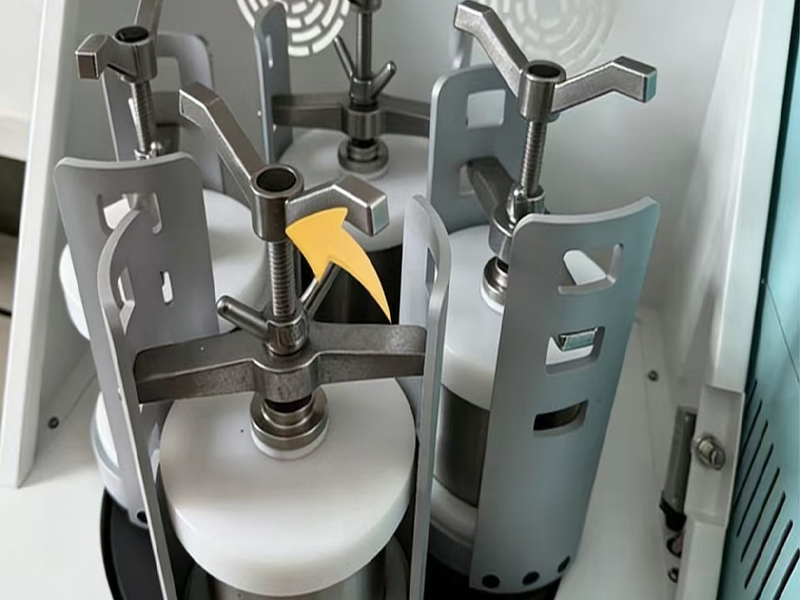
Transfer the mixture into a 250 mL agate grinding jar. Seal the jar securely and place it symmetrically in the planetary ball mill to ensure proper balancing and firm fixation.
Parameter Setting
Set an appropriate rotation speed and a total grinding time of approximately 10 hours to achieve high-energy impact and sufficient particle refinement.
Sample Collection
After grinding, stop the machine and remove the jar. The resulting product is a uniformly dispersed ultrafine ZnS powder, ready for further characterization or application.
Results
After planetary ball milling, the particle size of zinc sulfide is significantly reduced, reaching approximately 100 nm or even smaller. Analytical results indicate a uniform particle size distribution and stable grinding performance.
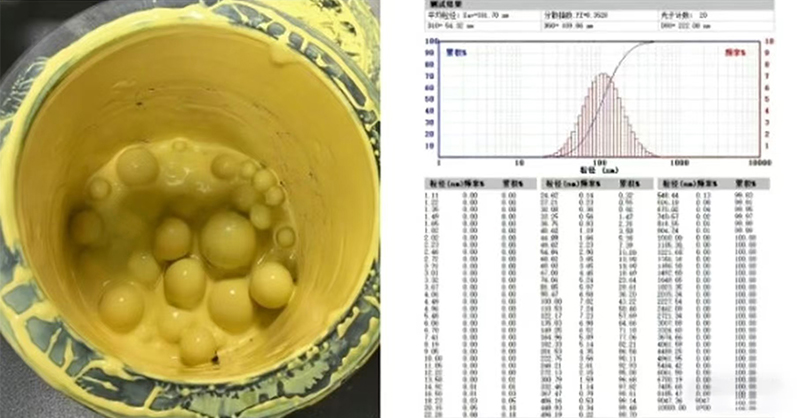
Compared with traditional manual grinding methods, this approach offers:
Significantly higher grinding efficiency
More precise particle size control
Improved sample uniformity
Better experimental reproducibility
This method effectively meets the requirements for nanomaterial preparation.
Precautions
Ensure grinding jars are placed symmetrically to maintain balance and safe operation.
Confirm that the jar is properly sealed and securely tightened (e.g., wing nuts) before operation.
For larger or bulk samples, use larger grinding balls for pre-crushing, followed by mixed-size grinding to improve efficiency.
The use of agate jars and zirconia balls helps minimize metal contamination and maintain sample purity.
Conclusion
With its unique planetary motion mechanism and high-energy grinding capability, the planetary ball mill provides an efficient, stable, and controllable solution for ZnS nanoparticle preparation. This method enables particle sizes below 100 nm while effectively reducing contamination and improving sample consistency, making it suitable for both research and early-stage industrial applications.

Subscribe to our Newsletter & Event right now to updated.



+86 21 51096910

sales@welsobio.com
marketing@welsobio.com

1-1009, National Industrial Design Park, No. 599 Jianzhu Road, Binhu, Wuxi , Jiangsu, China, 214062

Head Office: No. 439 Jinglian Road, Minhang District, Shanghai,China, 201108